.svg) info@scarsandlasers.co.nz
info@scarsandlasers.co.nz
15 Green Lane East, Remuera, Auckland, New Zealand

Monday - Friday: 7:45 am - 5:00 pm

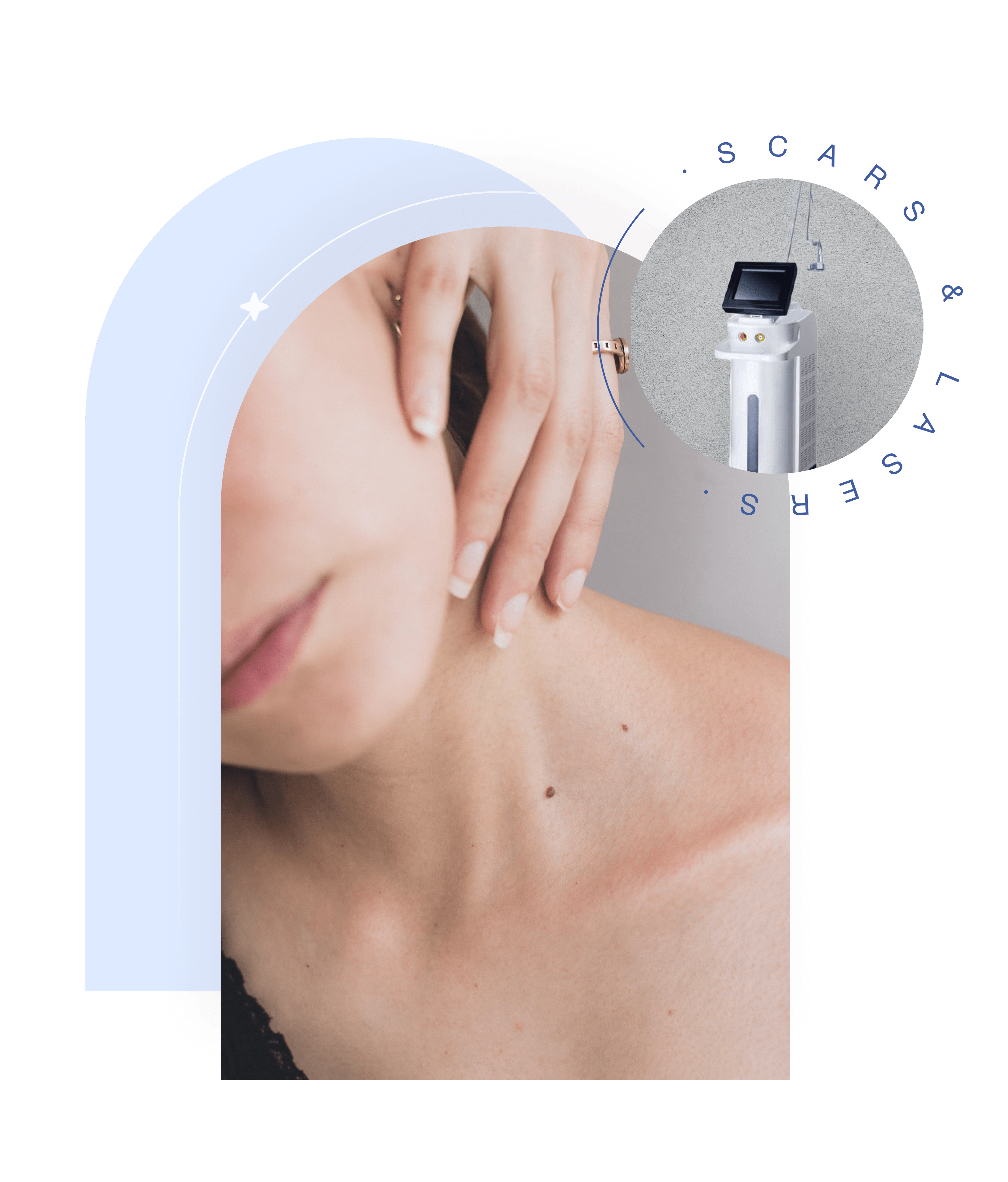
-TCA is highly effective for treating ice-pick, boxcar acne scars, and deep wide-open pores.
-The application method and concentration of TCA will vary depending on an individual's skin type.
-Recovery time is typically fast, ranging from 3-5 days.
-Combining TCA treatments with fractional lasers can lead to even faster results.
For
:
Ice-pick scars, enlarged pores
Procedure time
:
10 - 30 minutes
Duration of results
:
Permanent
Back to work
:
1-2 days
Recovery
:
3 - 5 days
Anaesthetic
:
Nil
How much
:
$$
Your specialist
:
Dermatologist, Nurse Specialist


TCA CROSS is most commonly used for narrow, deeper acne scars, particularly ice-pick scars and selected small boxcar scars. It can also be used in some cases to refine prominent or enlarged pores where there is a focal, scar-like opening in the skin. The treatment works best when the acid can be placed precisely into the base of the scar, stimulating controlled collagen renewal and gradual remodelling from within.
TCA CROSS is usually less suitable for broad, shallow rolling scars, widespread uneven texture, or scars caused mainly by tethering beneath the skin. In these situations, treatments such as laser resurfacing, subcision, vascular laser, microneedling, or regenerative collagen-stimulating treatments may be more appropriate. At Scars & Lasers, TCA CROSS is often used as part of a tailored combination acne scar plan, depending on scar type, skin quality, pigmentation risk, and overall treatment goals.
No. High-strength TCA is not suitable for all skin types and must be used very selectively. Darker skin types, easily pigmented skin, recently tanned skin, or skin prone to post-inflammatory pigmentation may have a higher risk of darkening, lightening, prolonged redness, or scarring after treatment.
At Scars & Lasers, TCA CROSS strength and suitability are assessed carefully, and alternative or lower-risk acne scar treatments may be recommended depending on skin type, pigmentation risk, and scar pattern.
The best way to determine whether TCA CROSS is appropriate is through a specialist dermatologist assessment of your acne scar pattern, skin type, pigmentation risk, and overall treatment goals. TCA CROSS is a highly precise technique and is most effective for selected scars, particularly deeper ice-pick scars and narrow boxcar scars, where the acid can be placed accurately into the scar base.
Correct technique is essential. If TCA is applied too broadly, too deeply, or to the wrong scar type, there is a greater risk of pigmentation change, delayed healing, or worsening of scarring. At Scars & Lasers, treatment suitability is assessed by a dermatologist-led team, and TCA CROSS may be recommended alone or as part of a broader acne scar plan involving laser resurfacing, subcision, vascular laser, or other collagen-remodelling treatments.
TCA CROSS can cause a brief stinging or burning sensation at the time the trichloroacetic acid is applied. Because the treatment is placed very precisely into individual scars or enlarged pores, the discomfort is usually short-lived and localised rather than prolonged.
Some redness, whitening or “frosting” of the treated spots, mild swelling, crusting, or tenderness can occur afterwards as part of the normal healing response. These changes usually settle gradually as the skin repairs. At Scars & Lasers, treatment is performed carefully and selectively, with aftercare advice provided to support healing and reduce the risk of pigmentation change or irritation.
The healing process for TCA treatment is generally predictable and follows these stages:
It's important to note that redness and post-inflammatory hyperpigmentation can take anywhere from 2-8 weeks to fully subside. Sunscreen and makeup can be safely applied starting on day 6 of the healing process.
We determine which procedures to combine based on your specific scar pattern, and they may include:
By combining these techniques, we can create a customised treatment plan that targets your unique acne scar pattern for optimal results.
While it is possible to combine TCA CROSS with microneedling, it's important to note that laser resurfacing tends to be a more effective option. Fine spot lasers can effectively deliver the laser beam to the side walls of scars, whereas microneedling may not be able to do so.
Lasers are capable of providing controlled heating and are therefore more effective at stimulating collagen production compared to microneedling.
TCA CROSS is a precise, localised treatment, but side effects can occur as part of the controlled healing response. Potential side effects include:
Stinging or burning during treatment
This is usually brief and localised to the treated scars or pores.
Redness and swelling
Mild redness, swelling, or tenderness can occur around the treated areas.
Whitening or frosting of the skin
A temporary white change may appear immediately after treatment, which is expected.
Crusting or flaking
Small crusts may form over the treated spots as the skin heals.
Temporary darkening or lightening of the skin
Pigmentation change can occur, particularly in some skin types or with sun exposure after treatment.
Prolonged redness or delayed healing
In some cases, redness or healing may take longer than expected.
Infection
This is uncommon but can occur if the treated areas are irritated, picked, or not cared for appropriately.
Worsening of scarring
Rarely, the skin may heal unpredictably, causing increased scarring or texture change.
At Scars & Lasers, careful assessment, precise application, and tailored aftercare are used to reduce these risks and support safe healing.
The number of treatment sessions needed will vary and depend on several factors, including:
Generally, individuals may require anywhere from 2 to 5 or more sessions, depending on the above factors.
TCA CROSS is only effective for certain types of scars. The following scar types are not amenable to this treatment:
Acne scar revision is a significant investment in terms of time, effort, and money. Therefore, it's important to get it right the first time around. Here are some pointers to consider:
No, it's not recommended to perform TCA treatment at home. TCA concentrations over 35% are typically used by dermatologists and plastic surgeons, and accidental spillage can result in serious complications such as scar widening, post-inflammatory hyperpigmentation lasting over 2 years, post-inflammatory hypopigmentation lasting a lifetime, post-treatment redness that persists for over 12 months, keloid, and hypertrophic scars.
For all appointment enquiries, medical referrals and urgent enquiries please contact us at info@scarsandlasers.co.nz or (09) 524 5011.