

Mohs Surgery
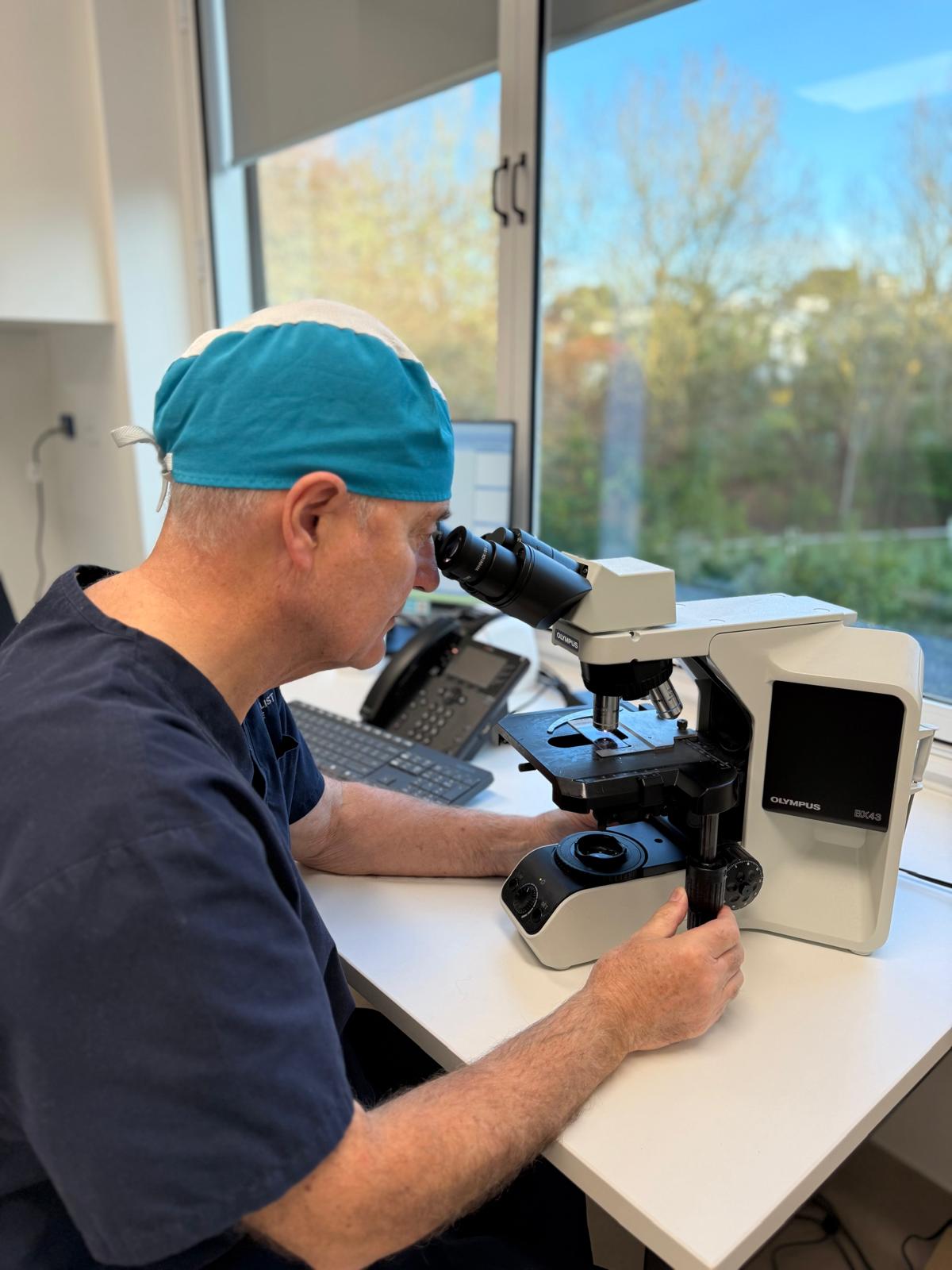
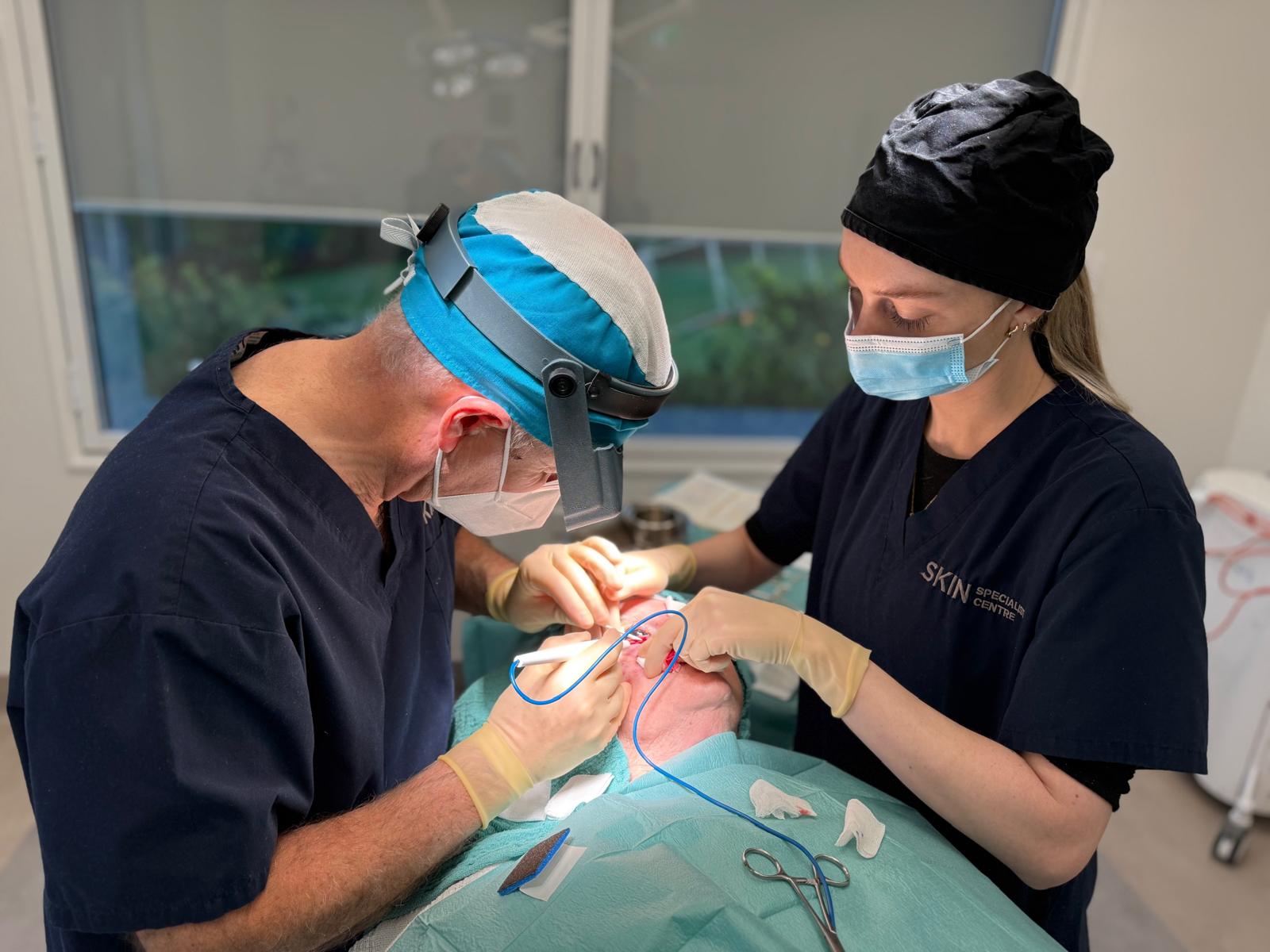
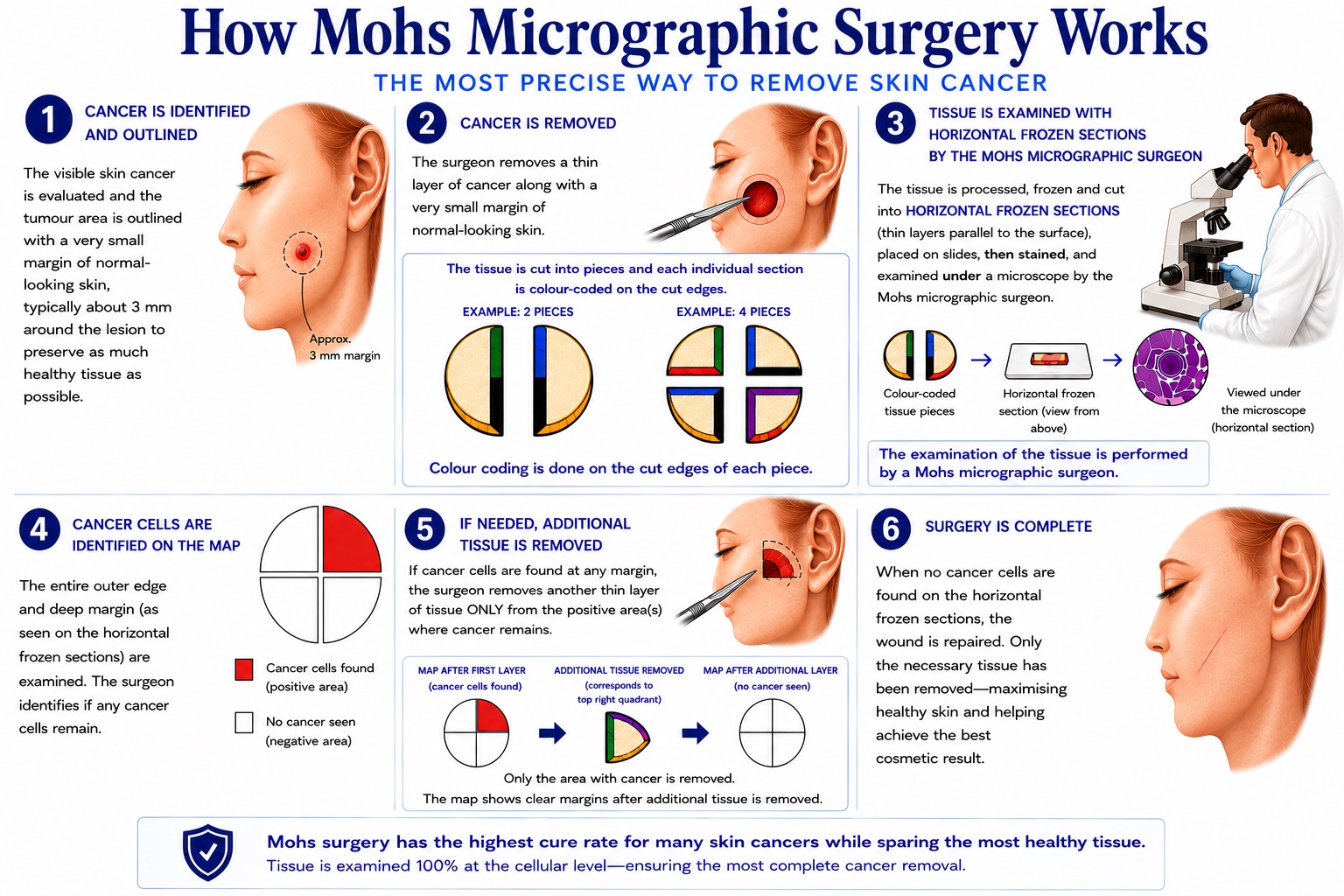
Mohs surgery is a technique for the microscopically-controlled excision of skin cancer, producing the highest cure rate for non-melanoma skin cancers suitable for the procedure. The technique combines surgical removal of the skin cancer in a precise layer-by-layer removal, with immediate microscopic examination of the removed tissue, using horizontal frozen sections to ensure no tumour remains.
Once clearance is achieved, the wound can be repaired. This process should not be confused with frozen sections, which refers to random, intermittent sectioning that examines only a small area of the overall specimen. Skin cancer is by far the most common malignant tumour in humans — the most common types being basal cell carcinoma, squamous cell carcinoma and melanoma.
Mohs surgery at a glance

Tracking Cancer to Its Roots
Both basal cell carcinoma and squamous cell carcinoma begin as a single point in the upper layers of the skin and slowly enlarge, both along the surface and downward. These extensions cannot always be seen directly, and the tumour often extends far beyond what is visible on the surface.
Basal cell carcinoma metastasis (spread) is extremely rare, and usually only occurs in the setting of long-standing, large tumours. Squamous cell carcinoma is slightly more dangerous and patients must be observed for any spread of the tumour, though this is still infrequent.
Patients with basal cell carcinoma, squamous cell carcinoma and certain rare neoplasms should ideally be treated by this technique if they fall within one of the following criteria:
Recurrent skin cancer
Skin cancers occurring in sites where recurrence rates with traditional approaches are high (e.g. around the eyes, nose and lips)
Incomplete removal of tumour
Large tumours (greater than 2cm in diameter)
Tumours with indistinct skin margins
Qualifications of Mohs Surgeons
Dr Kevin McKerrow is a Mohs Micrographic Surgeon who completed a fellowship in Mohs Micrographic Surgery at the New England Medical Centre, Boston, Massachusetts in 1989, and established the first Mohs surgical unit in New Zealand.
He is a Fellow of the American College of Mohs Surgeons.

Clinical studies have demonstrated that Mohs micrographic surgery offers a cure rate of up to 99% for basal cell carcinomas and 97% for squamous cell carcinomas over a 10-year period.
Contact UsWhat are the advantages of Mohs Surgery?
The Highest Cure Rate
Mohs offers the highest cure rate of any technique for non-melanoma skin cancers suitable for the procedure — up to 99% for basal cell and 97% for squamous cell carcinomas.
Minimal Removal of Healthy Tissue
Only the minimum of normal, tumour-free tissue is removed around the cancer.
Outpatient Under Local Anaesthesia
The procedure is performed under local anaesthesia as an outpatient.
Reconstruction Under Optimum Conditions
Once the cancer is fully cleared, any reconstructive surgery takes place under optimum conditions.
Dermatologist Reconstructive Expertise
Because Mohs surgeons are also dermatologists trained in reconstructive surgery, their extensive knowledge of the skin and its healing properties helps produce the best cosmetic result.
Usually Completed in Half a Day
In most cases the procedure — removal, on-site analysis, and repair — is completed within half a day.
Frequently Asked Questions
The highest cure rate for skin cancer with the least healthy tissue removed — Mohs micrographic surgery at Scars & Lasers.
Book Your Consultation
Take the first step towards healthier skin. Leave your details below and our friendly team will be in touch to secure your appointment.