

Understanding Early Thin Melanomas
Early thin melanomas (also called melanoma in situ / stage 0 or stage I) are the earliest and most treatable forms of melanoma. They’re usually confined to the top skin layer (or only minimally into the dermis) and are typically under ~0.7–1.0 mm thick (Breslow depth). They often show up as a new or changing mole, and can be checked using the ABCDE rule. When found early and removed promptly, outcomes are generally excellent.
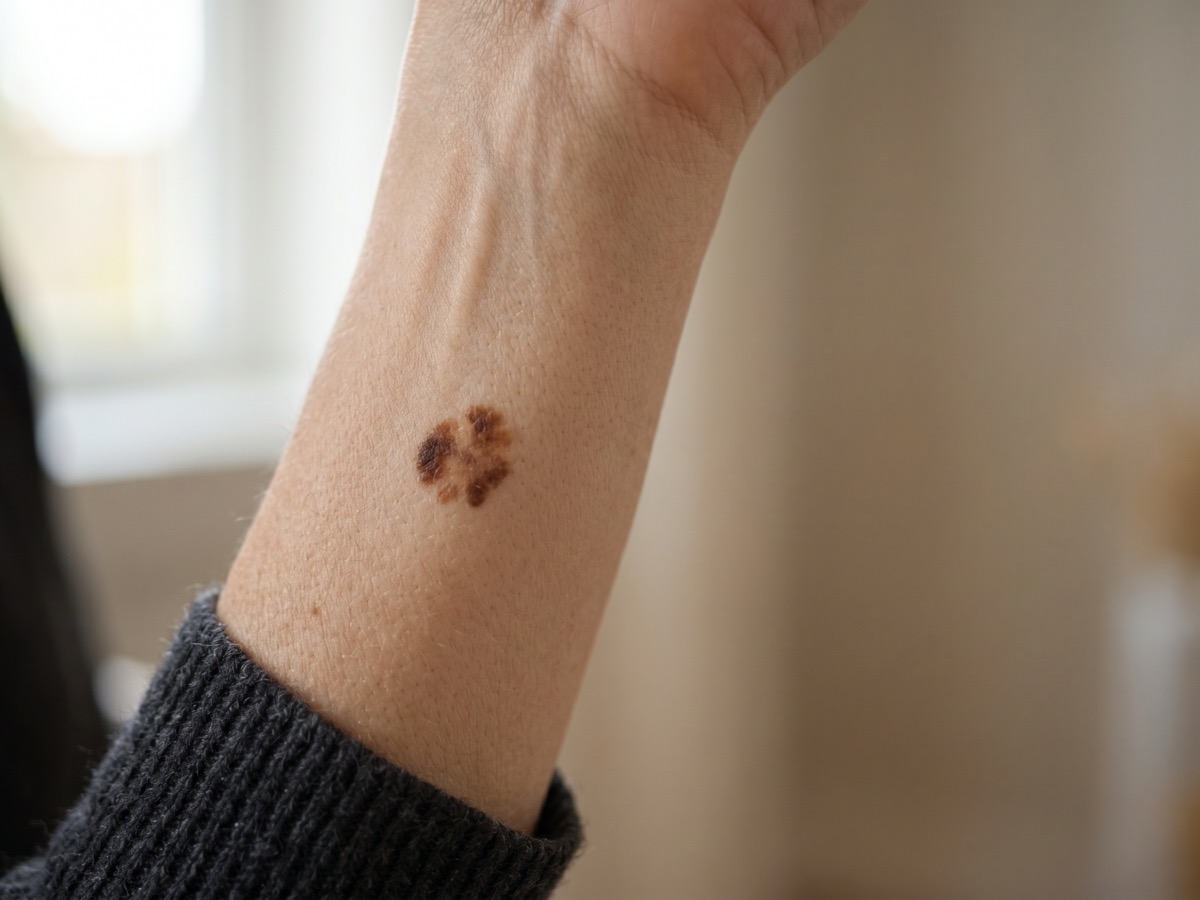

Early thin melanomas are melanomas caught at an early stage—either still on the surface layer of skin (epidermis) or with only minimal invasion into deeper layers.
They can look like a new mole, or a mole that’s changing, and the ABCDE checklist helps spot warning signs:
- A – Asymmetry: one half doesn’t match the other
- B – Border: irregular, uneven, scalloped, or blurred edges
- C – Colour: multiple colours or uneven colour in the same spot
- D – Diameter: often >6mm, but can be smaller
- E – Evolution: any change in size/shape/colour or new symptoms like itching/bleeding
The Science Behind It
Melanoma is treated by surgically excising the lesion, along with a safety margin of surrounding skin, to make sure the entire tumour is removed and the pathology shows clear margins (no melanoma cells at the cut edge). The amount of normal skin taken depends on how early the melanoma is—for example, melanoma in situ typically needs a smaller margin than an early invasive (stage I) melanoma—and the procedure is often done under local anaesthetic as a minor operation. Even when the melanoma has been fully removed, ongoing follow-up is important because a prior melanoma diagnosis increases the chance of developing another melanoma in the future, so regular skin checks, self-monitoring for new or changing lesions, and consistent UV protection remain part of long-term care.
Frequently Asked Questions
An early thin melanoma is one of the earliest and most treatable forms of melanoma, also referred to as melanoma “in situ” (stage 0) or stage I melanoma. It is typically confined to the outermost layer of skin (the epidermis), or has only minimally invaded the layer beneath (the dermis). These are usually considered “thin” when the measured thickness (Breslow depth) is about <0.7–1.0 mm. Because these are caught early, the page highlights that prognosis is excellent when diagnosed and treated promptly.
Important ACC & Treatment Disclaimer
ACC funding eligibility is determined by the Accident Compensation Corporation on a case-by-case basis. Approval is dependent on injury acceptance, clinical indication, and ACC policy at the time of application. Not all treatments offered at Scars & Lasers are ACC-funded. Private fees may apply for unfunded components of care.
Learn more about ACC IncidentsTransforming skin through advanced laser and energy-based dermatology.

Book Your Consultation
Take the first step towards healthier skin. Leave your details below and our friendly team will be in touch to secure your appointment.