

Keloid Scars
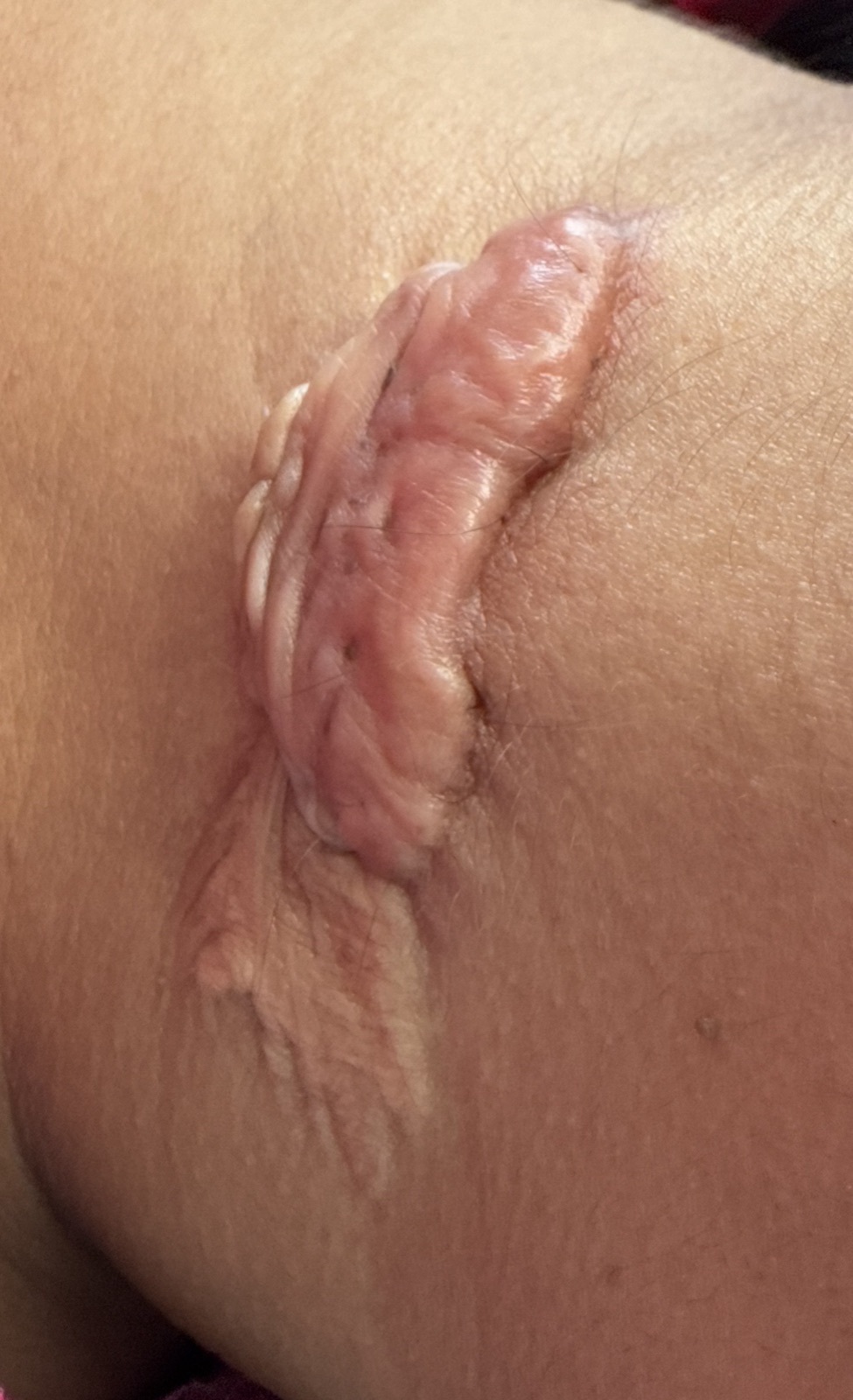
At a glanceKeloid scars are raised, thick scars that form from excess collagen during healing, often extending beyond the original wound. They can appear shiny, firm, and range in colour from pink to brown, causing itching or discomfort. Commonly found on the chest, shoulders, and earlobes, they may result from injuries or skin trauma.

The Science Behind It
Keloid scars occur due to an overactive wound healing response, where the body produces too much collagen, leading to the formation of a raised, fibrous scar that extends beyond the original injury. This abnormal healing process involves the proliferation of fibroblasts and excess deposition of extracellular matrix components, including collagen. Genetic predisposition plays a role in keloid formation, making it more common in individuals with a family history of keloids or certain ethnic groups, particularly those with darker skin. The exact molecular mechanisms behind keloid formation are still being studied.
Keloid Scar Treatment Options at Scars & Lasers
Keloid scars are caused by an exaggerated healing response and often require combination therapy. At Scars & Lasers, treatment is tailored to scar activity, thickness, symptoms (pain/itch), colour, and response to prior therapies.
Why Combination Therapy Matters
Keloid scars rarely respond to a single treatment alone. Combining injections, vascular lasers, fractional lasers and drug delivery techniques allows us to:
- Calm inflammation
- Reduce abnormal collagen production
- Improve scar thickness, colour and symptoms
- Lower recurrence risk
Important Considerations
- Keloids cannot always be permanently removed, but they can usually be significantly improved and controlled
- Multiple treatments are often required
- Maintenance therapy may be needed for long-term control
- Treatment plans are individualised after clinical assessment
Consultation & Assessment
All keloid scars are assessed by our experienced laser dermatology team to determine:
- Scar activity and thickness
- Previous treatments and response
- Skin type and pigment risk
- Suitability for laser-based therapies
Frequently Asked Questions
A keloid scar is an overgrowth of scar tissue caused by excessive collagen production during healing. Unlike normal scars, keloids extend beyond the original injury and may continue to grow over time.
Keloids develop due to an exaggerated wound-healing response. They are more common after surgery, trauma, burns, piercings, acne or insect bites, and may have a genetic or skin-type predisposition.
Keloids cannot always be permanently removed, but they can usually be flattened, softened, and symptoms significantly reduced. Long-term control often requires combination therapy and ongoing monitoring.
Keloids may cause:
- Itching or tenderness
- Pain or burning sensations
- Redness or colour change
- Tightness or reduced skin flexibility
Symptom control is a key treatment goal.
We offer a multimodal approach, which may include:
- Intralesional steroid injections
- Anti-metabolites (such as 5-Fluorouracil)
- Vascular laser therapy
- Fractional laser treatment using Alma Hybrid™
- Cold ablative fractional laser with UltraClear™
- Laser-Assisted Drug Delivery (LADD)
Treatment selection depends on scar size, activity, thickness, symptoms and previous treatments.
Steroids reduce inflammation and suppress abnormal collagen production within the scar. This helps flatten the keloid and reduce pain, itch and redness. Multiple treatments are often required.
Anti-metabolites such as 5-Fluorouracil are commonly used in combination with steroids, particularly for resistant or recurrent keloids. They help reduce fibroblast activity and lower recurrence risk.
Vascular lasers target the abnormal blood supply that fuels active keloids. This helps reduce redness, inflammation, itch and pain, and improves response to other treatments.
These fractional lasers create controlled micro-injury within the scar to:
- Improve thickness and texture
- Increase flexibility
- Enhance penetration of medications They are typically used as part of a staged treatment plan, not as standalone therapy.
LADD uses fractional laser channels to deliver medications deeper into keloid tissue. This improves treatment effectiveness while reducing the need for higher injection doses.
In some cases, keloid scar treatment may be covered by Accident Compensation Corporation if:
- The scar resulted from an accepted injury (e.g. burn, trauma, surgery)
- The treatment is deemed necessary for function or symptom control
ACC funding decisions are individual and not guaranteed. Some components of treatment may require private payment.
Most keloids require multiple treatment sessions over time. The exact number depends on scar severity, response to therapy, and whether maintenance treatment is required to reduce recurrence.
Showing 6 of 12 questions
Important ACC & Treatment Disclaimer
ACC funding eligibility is determined by the Accident Compensation Corporation on a case-by-case basis. Approval is dependent on injury acceptance, clinical indication, and ACC policy at the time of application. If you have a valid ACC claim accepted by ACC and relevant to the consultation, reception will confirm it before your appointment so the consultation fee can be submitted to ACC with no surcharge. Any proposed treatment requires separate ACC approval, and private fees may apply for care that is not funded.
Learn more about ACC IncidentsSpecialist-led keloid scar control through advanced laser and regenerative dermatology.
Book Your Consultation
Take the first step towards healthier skin. Leave your details below and our friendly team will be in touch to secure your appointment.