

Actinic Keratosis (AK)
Actinic keratosis (AK) is a common sun-related skin condition. It appears as rough, scaly patches that can look white, red, or brown. These spots typically form on areas that receive the most UV exposure—such as the face, scalp, ears, neck, hands, and forearms. AKs are most often seen in fair-skinned individuals and serve as an important warning sign of sun damage, with some lesions carrying a risk of progressing to skin cancer if left untreated.
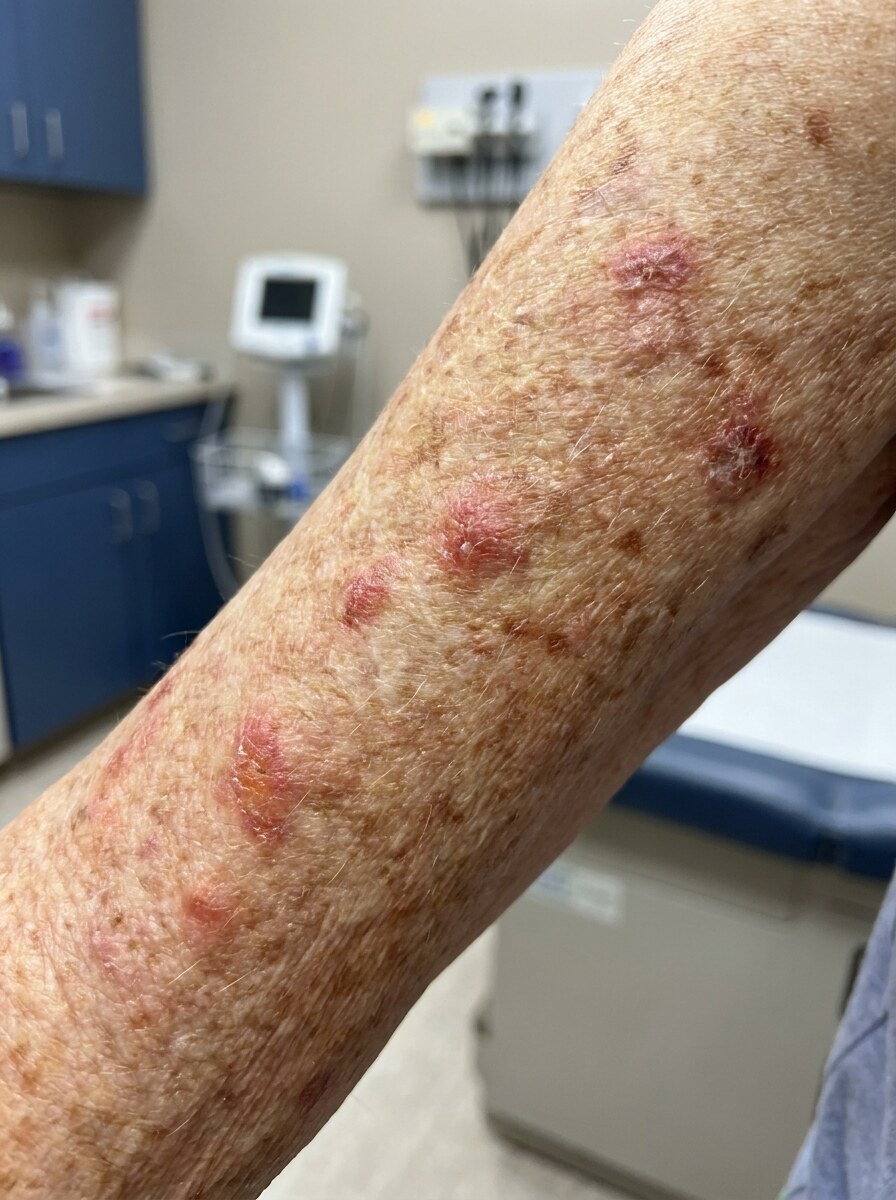

Actinic keratosis (AK) is a common sun-related skin condition frequently seen in fair-skinned New Zealanders. It presents as rough, scaly, or sandpaper-like patches that may be white, red, pink, or brown. These lesions arise on chronically sun-exposed areas such as the face, scalp, ears, neck, hands, and forearms. AKs are medically significant because they are considered precancerous — meaning that, if left untreated, a proportion can progress to squamous cell carcinoma (SCC). Having multiple AKs is also a sign of cumulative UV damage and increases a person’s overall risk of developing skin cancer.
The Science Behind It
AKs develop when ultraviolet (UV) radiation damages the DNA of keratinocytes (the main cells of the epidermis). Over time, this repeated UV exposure leads to mutations that interfere with normal cell growth and repair. Damaged keratinocytes become atypical and begin to multiply abnormally, forming the characteristic rough, scaly lesions seen on the skin’s surface. In some cases, these mutated cells continue to accumulate genetic errors, eventually transforming into invasive squamous cell carcinoma. This process explains why early detection, sun protection, and appropriate treatment are essential in preventing skin cancer progression.
Treatment at a Glance
| Treatment Type | Number of Sessions | Procedure Time | Typical Recovery |
|---|---|---|---|
| Cryosurgery | 1-2 | 1-5 minutes | Approximately 1–2 weeks depending on lesion size and body location |
| Photodynamic Therapy (PDT) | 2 | 60 -90 minutes | Approximately 5–10 days with temporary redness, crusting, and sensitivity |
| Curettage and Diathermy | 1 | 5-15 minutes | Approximately 1–2 weeks depending on the size and depth of the procedure |
Frequently Asked Questions
AKs are considered precancerous because a small percentage can progress into squamous cell carcinoma (SCC). Having multiple AKs also indicates significant sun damage, increasing your overall skin cancer risk. Early assessment and treatment help prevent progression.
Important ACC & Treatment Disclaimer
ACC funding eligibility is determined by the Accident Compensation Corporation on a case-by-case basis. Approval is dependent on injury acceptance, clinical indication, and ACC policy at the time of application. Not all treatments offered at Scars & Lasers are ACC-funded. Private fees may apply for unfunded components of care.
Learn more about ACC IncidentsEarly treatment of actinic keratoses with specialist dermatologist-directed care, advanced laser and light therapies, and precision skin cancer prevention strategies.
Book Your Consultation
Take the first step towards healthier skin. Leave your details below and our friendly team will be in touch to secure your appointment.