

Laser Assisted Drug Delivery
At a glanceLaser-Assisted Drug Delivery uses fractional laser channels to drive medical-grade treatments deeper into the skin — boosting results for scars, sun damage and pigment loss, under specialist dermatological care.
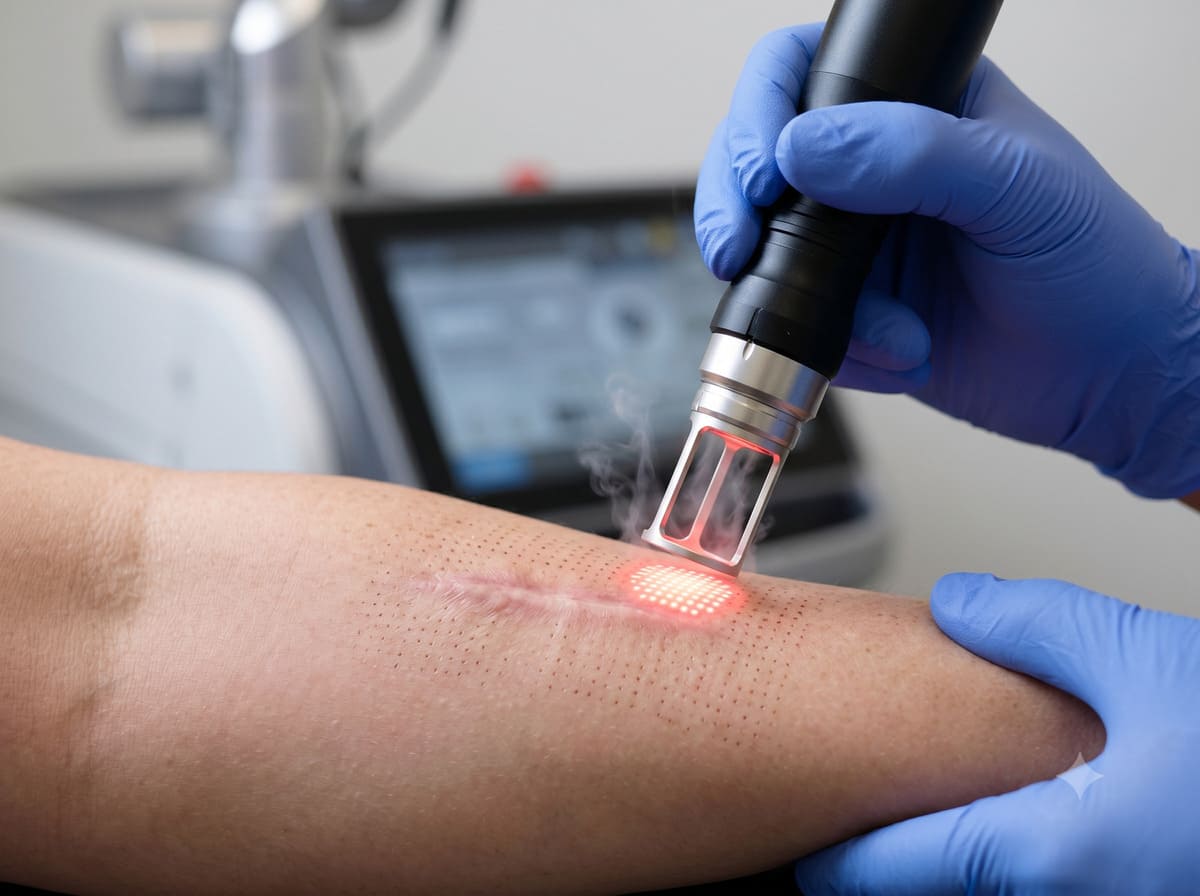

Laser-Assisted Drug Delivery (LADD) is an advanced medical laser technique used at Scars & Lasers to improve the effectiveness of topical treatments by delivering them deeper into the skin where healing and regeneration occur.
Using fractional laser platforms such as Acclaro UltraClear®, Alma Hybrid™, Fraxel® Restore Dual®, and picosecond laser technology, microscopic channels are created in a controlled and precise manner.
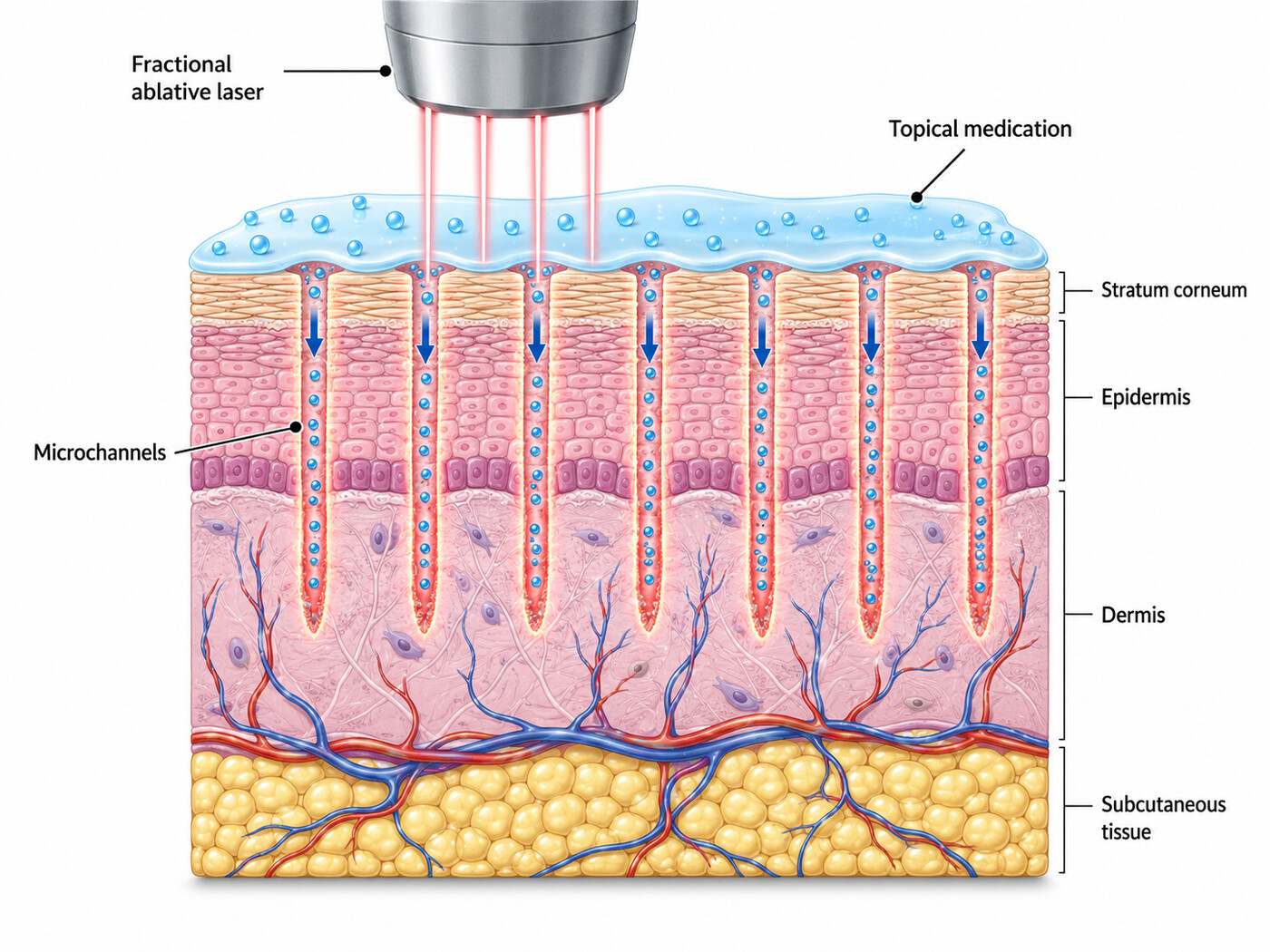
These temporary channels allow medical-grade medications to bypass the skin barrier and reach targeted tissue layers more effectively than topical application alone.
LADD is commonly used as part of personalised treatment plans for scars, photodynamic therapy (PDT) for sun-damaged or precancerous skin, and selected cases of pigment loss, combining evidence-based medicine with advanced laser science under specialist dermatological supervision.
Expert Assessment Matters
- Enhanced Drug Absorption: Laser technology improves the delivery of corticosteroids and 5FU directly into scar tissue.
- Reduces Scar Symptoms: Effectively minimizes thickness, redness, and discomfort associated with hypertrophic scars.
- Promotes Healing: Stimulates the skin's natural healing processes, leading to improved texture and appearance.
- Minimally Invasive: Offers a non-surgical option with minimal downtime and side effects.
Treatment at a Glance
Frequently Asked Questions
Laser-Assisted Drug Delivery (LADD) is an advanced dermatological technique where fractional laser energy creates microscopic channels in the skin. These channels allow medical-grade topical agents to penetrate deeper and more evenly than topical application alone, enhancing treatment efficacy while maintaining safety.
At Scars & Lasers, LADD is used to improve outcomes in complex skin conditions by combining precision laser technology with targeted medications. This approach allows us to individualise treatment plans for scars, pigmentation disorders, photodynamic therapy, and pigment loss.
LADD is used across a range of medical and dermatological indications, including:
Scars – hypertrophic scars, keloids, surgical scars, acne scarsPhotodynamic Therapy (PDT) – for actinic keratoses and selected sun-damaged or precancerous lesionsPigment Loss (Hypopigmentation) – post-inflammatory hypopigmentation, selected scar-related pigment lossSkin Texture & Quality – improving collagen remodelling and skin barrier repairAdjunctive therapy** – enhancing laser outcomes when conventional topical treatments are insufficient
In scar management, fractional lasers create controlled micro-channels within fibrotic tissue. This allows medications such as corticosteroids, anti-fibrotic agents, or regenerative compounds to reach deeper scar layers, helping to:
Reduce scar thickness and stiffnessImprove texture and pliabilityEnhance collagen remodellingReduce recurrence risk in selected scars
Fractional Alma Hybrid™ and Acclaro UltraClear® lasers **are our primary choice of lasers, for drug delivery in hypopigmented scar management.
Alma Hybrid™ laser penetrates deeper and is ideal for thicker or more fibrotic scars.Acclaro UltraClear® laser offers more precise ablation with minimal thermal damage, making it ideal for delicate or facial areas.
Your specialist laser dermatologist will determine the best option based on the scar's characteristics and your skin type.
Several topical agents can be used following laser treatment to promote repigmentation, including:
5-Fluorouracil (5-FU) – stimulates melanocyte migrationTacrolimus – supports immune regulation and pigment restorationProstaglandin analogs (Bimatoprost)** – promotes melanin productionThese medications are selected based on your individual needs and the clinical characteristics of the scar.
Treatment typically involves a series of 3 to 6 sessions, spaced about 4–6 weeks apart. Visible improvement depends on factors such as the depth and age of the scar, your skin type, and the topical agent used. As scar pigmentation concerns vary widely, treatment is always personalised and multimodal to achieve the best possible results.
When performed by trained dermatology specialists, LADD is a safe and well-established technique. At Scars & Lasers:
Treatment depth and energy settings are carefully controlledOnly medical-grade agents are usedPatient suitability is assessed thoroughly before treatment
Temporary redness, swelling, or mild discomfort may occur and usually settles within days.
Downtime varies depending on the laser and medication used. Most patients experience:
Mild to moderate redness for 2–5 daysPossible light flaking or drynessMinimal interruption to daily activities
Your dermatologist will advise on expected recovery based on your treatment plan.
The number of sessions depends on the condition being treated:
- Scars: often 2–6 sessions
- PDT: usually 1–2 sessions per treatment area
- Pigment loss: multiple sessions over several months may be required
Treatment plans are individualised and reviewed regularly.
Not all patients are suitable for LADD. Factors such as skin type, underlying medical conditions, active infections, and medication use are carefully considered. A specialist consultation is essential before treatment.
Showing 6 of 11 questions
Precision laser-assisted drug delivery for deeper penetration of therapeutic and regenerative skin agents.
Book Your Consultation
Take the first step towards healthier skin. Leave your details below and our friendly team will be in touch to secure your appointment.